
Category: Azure
Microsoft SC-100 Security Architect Expert Certification Study Reference
If you’re studying for the SC-100 or you just want a decent reference to many of Microsoft’s security topics please feel free to try my reference sheet attached below.
Note that almost all of the (233) web links in this sheet reference the Microsoft Learn site (https://learn.microsoft.com) so you don’t have to worry about them being malicious :).
Enjoy!
Microsoft Cloud Licensing and Cost Summary
Here’s a simple high level guide to navigating Microsoft licensing from a security perspective.
This guide won’t go into the details of ‘why’ you need these licenses, and it won’t discuss the operational costs of implementing these security solutions.
Your main reference for Microsoft enterprise licensing is here!
(don’t worry if you’re not in the US, it will ask you to switch)
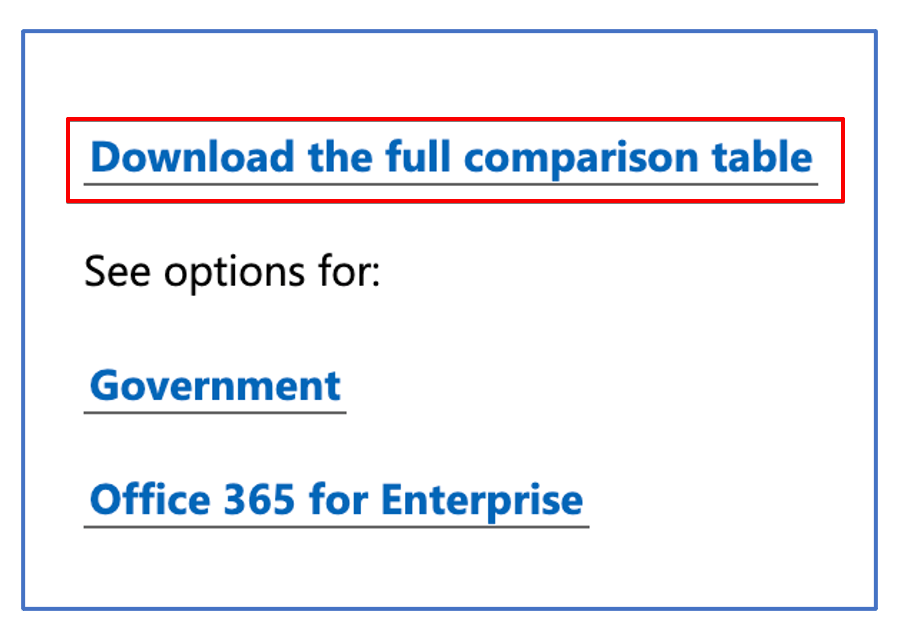
On the left hand side of this page is a pdf you should download and really get to know:
Budgeting for security in any organization can be a challenge. Let’s assume you’re taking the leap with Microsoft but you want to work it into your budget.
Consider E5 licenses for a subset of users and E3 for the rest.
This will allow you to optimize the use of the security related features for your critical infrastructure and then grow out to the larger cost of protecting everything.
P1 vs P2
Next look at the P1 vs P2 features. If you have that E5 license then you’re mostly set with the P2 features since they’re included with E5.
If you have E3 then consider adding all of the P2 features until it makes more sense cost-wise to switch to E5. The order in which you add the P2 features will depend on your security priorities.
Don’t shrug off the importance of many of these P2 features. Here are some links to look at for more information:
Additional cost considerations:
- DDoS protection
- WAF
- SIEM – Microsoft Sentinel
- EASM – External Attack Surface Management
See the link for the Pricing Calculator below to dig into the cost of these additional services.
References:
M365 Licensing (includes everything related to E3, E5, P1, P2, etc.)
Defender for Cloud Pricing
Pricing Calculator – select the ‘Security’ side menu and go from there
US National Cybersecurity Strategy
Based on the recent publication of the US National Cybersecurity Strategy, here are some practical suggestions for implementing cybersecurity solutions that loosely map to its guidelines:
- Defend Critical Infrastructure by:
- Expanding the use of minimum cybersecurity requirements in critical sectors to ensure national security and public safety and harmonizing regulations to reduce the burden of compliance
Recommendation: Perform a gap analysis on your cybersecurity defenses. Start with a ‘master list of all recommended defenses and compare that to your organization’s tools’ Prioritize the implementation of any required defenses. Consider consolidation of security solutions under a single vendor’s licence agreement to save on costs. Create good architecture diagrams to describe your infrastructure from a cybersecurity perspective.
- Enabling public-private collaboration at the speed and scale necessary to defend critical infrastructure and essential services
Recommendation: Create an inventory of all critical assets. If you’re a small org then a manual inventory is fine, otherwise consider a mature asset collection tool to help with this (google ‘asset inventory cybersecurity’ and you’ll get plenty of hits). Use your asset inventory to categorize critical assets and use this information in your SIEM to help with better correlations.
- Defending and modernizing Federal networks and updating Federal incident response policy.
Recommendation: Review/create incident response policies and procedures. Consider creating specific response procedures that map to your SIEM incidents to improve clarity and incident response times.
- Disrupt and Dismantle Threat Actors by:
- Using all instruments of national power, making malicious cyber actors incapable of threatening the national security or public safety of the United States
- Strategically employing all tools of national power to disrupt adversaries
- Engaging the private sector in disruption activities through scalable mechanisms
- Addressing the ransomware threat through a comprehensive Federal approach and in lockstep with international partners.
Recommendation: Have a clear understanding of the ‘kill chains‘ that may affect your organization. Use Mitre ATT&CK and your favorite security sites to help research threat actor groups. Identify security tools needed to detect/block attackers. Test/validate the effectiveness of those tools using Red/Blue/Purple team events.
- Shape Market Forces to Drive Security and Resilience by:
- Placing responsibility on those within the digital ecosystem that are best positioned to reduce risk and shift the consequences of poor cybersecurity away from the most vulnerable in order to make the digital ecosystem more trustworthy
- Promoting privacy and the security of personal data
Recommendation: Move data to the cloud and implement a data protection solution that not only tags and categorizes your data but locks out access if it’s stolen.
- Shifting liability for software products and services to promote secure development practices
- Ensuring that Federal grant programs promote investments in new infrastructure that are secure and resilient.
- Invest in a Resilient Future by:
- Reducing systemic technical vulnerabilities in the foundation of the Internet and across the digital ecosystem while making it more resilient against transnational digital repression
Recommendation: Implement a robust vulnerability assessment solution. Note that moving all your assets to the cloud can make this far easier to manage and can greatly benefit the effectiveness of your CSPM and SIEM.
- Prioritizing cybersecurity R&D for next-generation technologies such as postquantum encryption, digital identity solutions, and clean energy infrastructure and developing a diverse and robust national cyber workforce.
- Forge International Partnerships to Pursue Shared Goals by:
- Leveraging international coalitions and partnerships among like-minded nations to counter threats to the digital ecosystem through joint preparedness, response, and cost imposition
- Increasing the capacity of partners to defend themselves against cyber threats, both in peacetime and in crisis; and working with allies and partners to make secure, reliable, and trustworthy global supply chains for information and communications technology and operational technology products and services.
Recommendation: Although many are reluctant to go back to the IBM days of putting all your security solutions into a single basket, cloud vendors and MSSPs have made great progress in the past 5+ years to provide a long list of services under one roof. When looking for one security product it’s very important to think broader and understand the interconnected values between all of your other security tools (XDR!). Security decision makers will often find that re-shuffling several of their security solutions makes more sense than just adding them one brick at a time.
Microsoft Ignite 2022 – START HERE
https://news.microsoft.com/ignite-2022-book-of-news/
https://ignite.microsoft.com/en-US/home
The list of Ignite presentation topics is HUGE!!!
Fortunately, Microsoft provides MVPs with an quick reference sheet so we can share our top picks with you.
So here are my top picks for security topics from Microsoft Ignite (and a few other non-security topics):
Rob Lefferts, CVP of PM, Modern Protection and SOC
https://ignite.microsoft.com/en-US/speakers/66804f79-fa68-4762-8f82-45798387e70e?source=/speakers
Shawn Bice, CVP, Cloud Security
https://ignite.microsoft.com/en-US/speakers/0e6b8553-7111-4422-94e0-04a8dddbd678?source=/speakers
What’s new in SIEM and XDR: Attack disruption and SOC empowerment
https://ignite.microsoft.com/en-US/sessions/e1f4b983-55d3-4048-8e90-9c22c4362e6b
Zero Trust as Business Driver: 3 Discrete Scenarios
https://ignite.microsoft.com/en-US/sessions/9974d5a2-b241-4ede-ab2d-c2cd1b7a83be
From Code to Cloud: A new Approach to Integrating Multicloud Security
https://ignite.microsoft.com/en-US/sessions/28f61a40-f1e6-43d8-9fd0-e3c8c6267bac
Secure access and improve efficiency with Microsoft Entra
https://ignite.microsoft.com/en-US/sessions/538bf946-a7bf-46dc-809f-9fbda241f918
Protect Everything, Everywhere With Comprehensive Security
https://ignite.microsoft.com/en-US/sessions/17bbd01d-4e26-4e2e-9eec-3a060b477eda?source=sessions
Azure Arc
https://ignite.microsoft.com/en-US/sessions/50f1092f-6209-4349-b02e-9ad2872ad136?source=sessions
https://azure.microsoft.com/en-us/products/azure-arc/hybrid-data-services/#overview
Azure Monitor
https://techcommunity.microsoft.com/t5/azure-observability-blog/bg-p/AzureObservabilityBlog
Azure – Postman integrations
Supply Chain Management Certification
Microsoft Cloud for Sustainability
Power Automate
Top 5 Cybersecurity Capabilities
5 cybersecurity capabilities announced at Microsoft Ignite 2022
Microsoft Entra
https://ignite.microsoft.com/en-US/sessions/538bf946-a7bf-46dc-809f-9fbda241f918?source=sessions
https://www.microsoft.com/en-us/security/business/microsoft-entra
Microsoft Sentinel
Microsoft Purview
Making Security Fun with Microsoft Cloud Games
This is a really fun way to learns some practical skills with Microsoft Cloud security tools.
I would recommend this for anyone who has a Microsoft E5 license or anyone using Microsoft cloud based products who is ready to get serious about securing their cloud and on-prem environment with Microsoft security tools.
This is not for beginners.
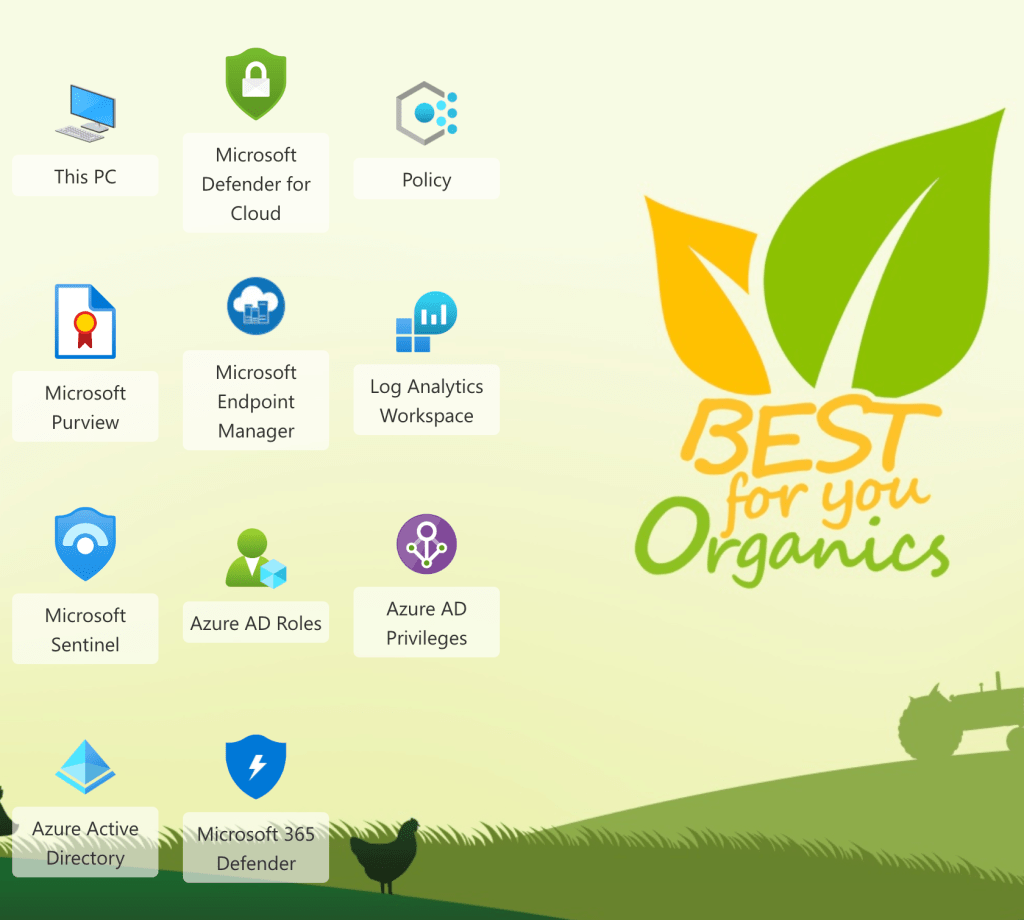
It’s expected you have at least a basic understanding of what these security tools are shown in this screenshot from the game:
Expect to spend at least a couple of hours playing the game.
Have fun!
Performing a Security Audit on Logic Apps
As DevOps move toward no-code apps in the cloud, there becomes a need for security reviews and controls to prevent risky
This is nothing new, but the need for better security reviews is becoming clear as more people try to rush to get their apps done in the easiest way possible.
Here’s a simple approach to identifying security risks in your logic apps:
- Create an architecture diagram of your logic app. This can be a simplified version that just shows the high level logic.
- Break down the logic app by it’s components:
- The individual logic app components – you likely won’t find too many security problems here.
- all the parameters – don’t hardcode passwords into parameters!
- connectors – Often the culprit of weak security in logic apps. Really understand what these connectors are communicating with. Don’t allow public access. Limit the roles/permissions.
- app registrations – another culprit of weak security. If app registrations are needed for your logic apps, be sure permissions are set to their most restrictive settings. avoid read.all readwrite.all settings.
- managed identities – if possible, use managed identities instead of user accounts for your connectors. Many logic apps don’t yet support managed identities, so those apps will require additional monitor and possibly frequent password/secret changes.
3. Use Resource Locks to prevent changes. If someone tries to turn off resource logs be sure it’s logged and alerted on.
4. Restrict user/admin access to your logic apps. Some apps can have really powerful permissions/access, so you don’t want users to ever have the ability to change logic apps unless they’ve been given specific short-term permissions to do so.
5. LOG EVERYTHING – wherever possible, enable logging within logic apps and connectors. Store logs in a Log Analytics Workspace. Use Azure Monitor alerts ore Microsoft Sentinel to monitor/report/alert on all activities.
6. Perform ‘attack simulations‘. Run your logic apps through test conditions which will trigger your alerts. Validate your alerts work as expected.
7. Build a ‘logic app security audit’ spreadsheet. Use this as a template for repeated audits for future logic app security testing. Use the above ideas as the initial framework for your spreadsheet.
Zero Trust – A simple Approach for Azure Enterprises
Zero Trust sounds very enticing, but feels overwhelming as much as any other standards based framework.
However there are some quick wins in the Azure world, and all you need is:
- A good checklist (The Microsoft Zero Trust Assessment Quiz)
- A Microsoft Sentinel workbook (see below)
In addition, Microsoft has a ton of direction around Zero Trust like:
If you prefer to save some reading time, I’ve taken Microsoft Zero Trust Assessment Quiz results and compressed it into a clean list of questions here:
Microsoft has also added a Zero Trust workbook to Azure Sentinel, so if you’re using their SIEM, there’s an excellent report that you can export and have a full list of security tool recommendations that you likely already own (depending if you have an E3 or E5 license)
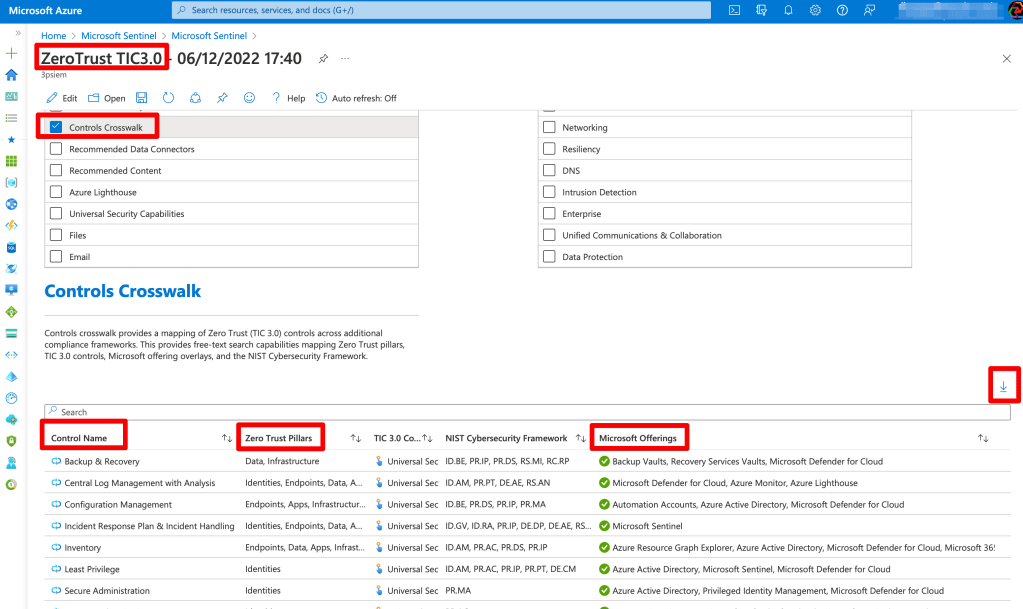
If you’re familiar with the resources under ‘Microsoft Offerings’ then you can begin planning your Zero Trust controls around these features. If you’re not familiar then now it the time to begin learning and proposing a Zero Trust approach around these tools.
Enjoy!
Mapping Cyber Defense Use Cases to Mitre ATT&CK Data Sources
Mitre ATT&CK provides so many ways to quantitatively think about approaches for defending against attackers.
However it can be challenging to map the ATT&CK matrix to to real-world defense methods.
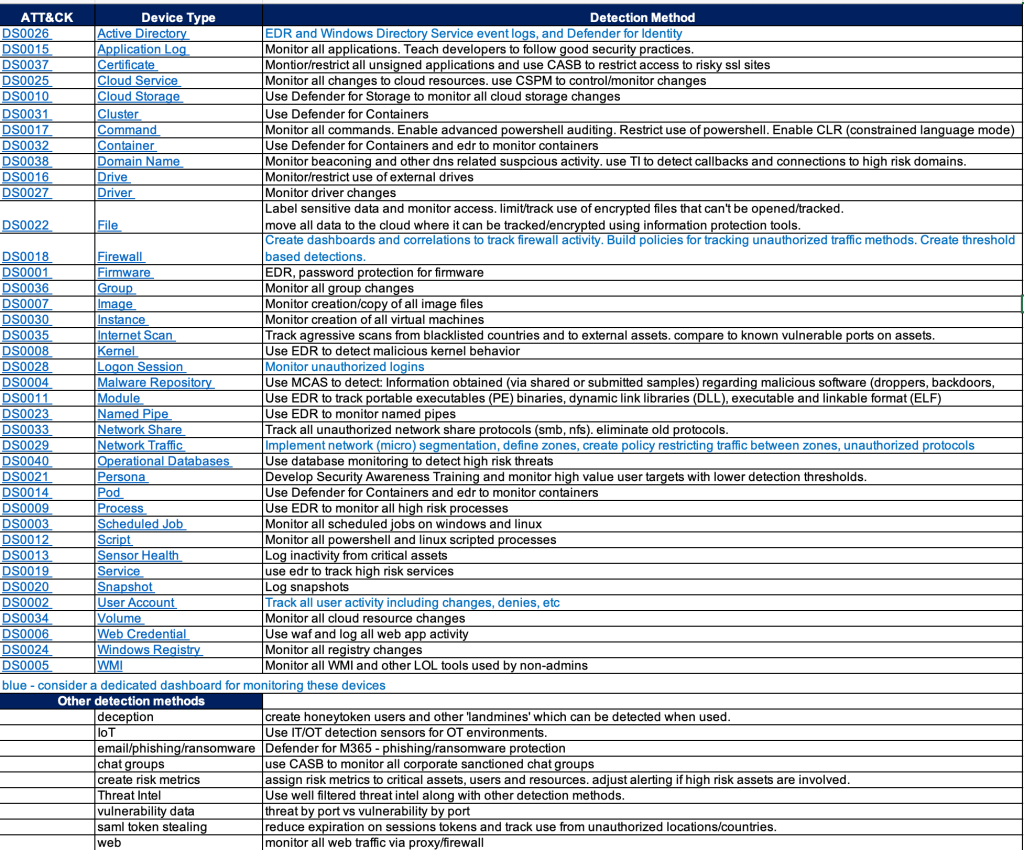
One approach is to look at the ATT&CK data sources and research detections that would map to those data sources.
This still requires some experience and a bit of guessing since there doesn’t appear to be an easy button way to map data sources to detection tools.
Endpoint Detection vendors have done a pretty good job mapping detections to ATT&CK techniques but few of them share their mappings in a simple spreadsheet – that would greatly help validate your detection gaps.
SIEM products like Microsoft Sentinel have done a good job mapping detection rules AND log sources to ATT&CK.
The chart below is an example of an easy way to provide a path forward on where to focus efforts for detections. It also provides a gap analysis for any obvious security tools that may be missing in your environment.
And hopefully my short detection method recommendations will give you some ideas or at least stir conversation.
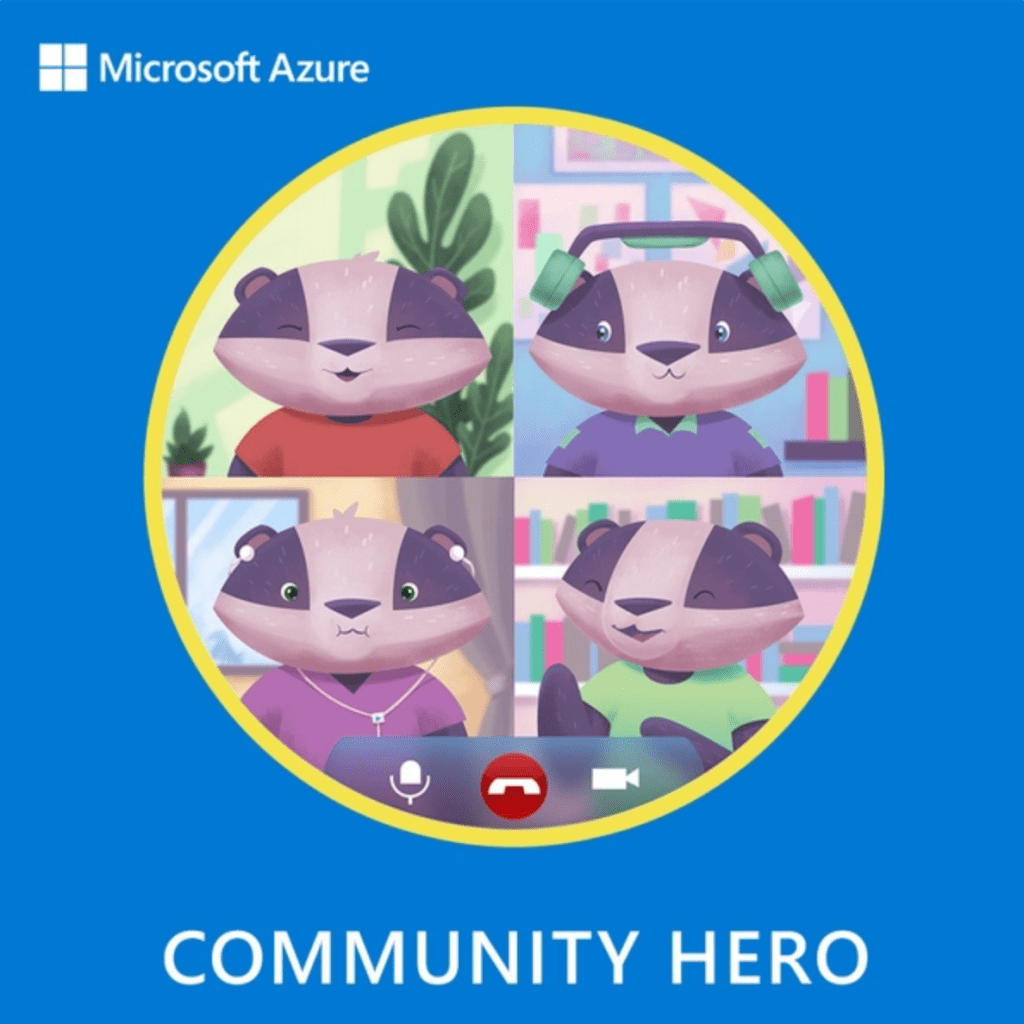
I’m a Microsoft Recognized Community Hero!
I’m very excited to have been recognized by Microsoft as an Azure Community Hero!
Having worked with (not employed by..) Microsoft for several years as a Security Solutions Advisor/Developer, in 2021/22 I began taking on more of a volunteer role finding ways to give back to the community in any ways I could find.
After several months of contributing on the Microsoft Q&A sites I was very surprised to receive this badge(r) of recognition which they title ‘Microsoft Azure Community Hero’.
So I hope you don’t mind me sharing in my happiness for this honor.
Isn’t it cute?
https://jumpnet.enjinx.io/eth/asset/68c0000000000065/183?source=EnjinWallet-1.15.1
 Simple-Security